Lugana DOC: Production Rules, Territory and the Turbiana Grape
December 17, 2025
The Terroir of Lugana: Lake Garda in the Wine
December 18, 2025
Time as a choice
It’s not a matter of quality.
Between young Lugana and Lugana Riserva there is no hierarchy—only a difference in time.
It’s like choosing whether to listen to live music or to hear it again years later: the melody is the same, but the depth with which it reaches you changes. Lugana is one of those wines that knows how to live beautifully in both moments.
Young Lugana: the voice of the present
Young Lugana is immediacy.
It is the wine that tells the story of the vintage without filters, with freshness and clarity. In the glass it is bright, direct, and vibrant.
On the nose, it reveals:
- white flowers
- citrus notes
- light herbal hints
On the palate it is taut, savory, and fluid. It doesn’t ask for contemplation, but for attention. It is the Lugana that accompanies everyday life, the table, and spontaneous convivial moments.
Lugana Riserva: when wine learns to speak softly
Lugana Riserva is the result of waiting.
According to the regulations, it requires a long aging period—at least two years, part of which in bottle. But the technical detail says little about what truly happens.
Time changes the wine without distorting it.
The aromas become more complex: ripe fruit, light honey, stone, dried herbs. Freshness remains, but it integrates. The structure broadens, the sip becomes deeper, slower.
It is an aged Lugana that does not lose tension, but gains memory.
The real differences between young Lugana and Lugana Riserva
The differences in Lugana are not found only on the label, but in how the wine presents itself and asks to be listened to.
Young Lugana:
- favors freshness and immediacy
- is ideal for everyday drinking
- naturally complements food
Lugana Riserva:
- expresses complexity and depth
- invites reflection
- has greater aging potential
They are two different languages spoken by the same land.
Aging: a delicate passage
In aged Lugana, aging is never an exercise in force.
Its purpose is not to change the wine, but to allow it to find balance.
Work in the cellar is made of measured choices: long times, minimal intervention, constant attention. The risk is always the same—overpowering Turbiana. The virtue lies in letting it grow.
When to choose young Lugana
Young Lugana is the right choice when:
- you are looking for freshness and drinkability
- you want a versatile wine at the table
- the occasion is informal and convivial
It is the wine of the present, of today, of the spontaneous gesture.
When to choose Lugana Riserva
Lugana Riserva is perfect when:
- time is part of the experience
- the wine takes center stage
- you want a white wine capable of surprising
It is a wine to be shared slowly, to be remembered.
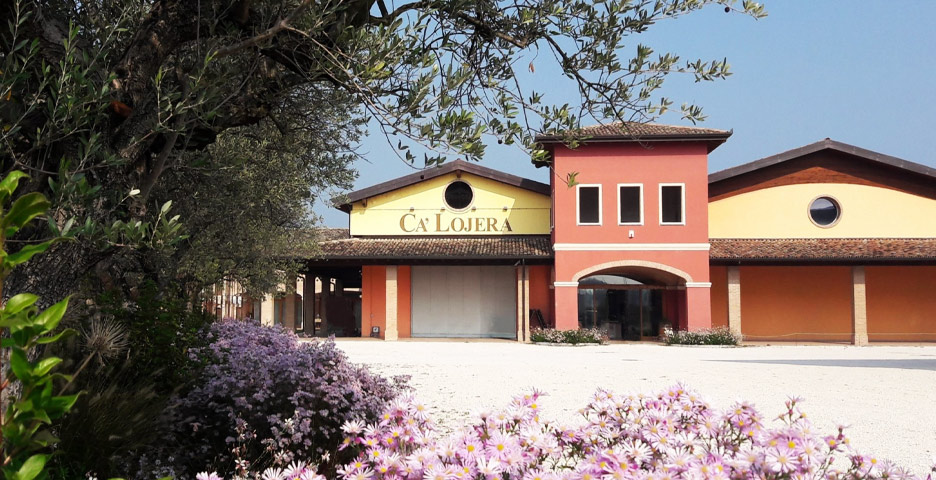
Ca’ Lojera: two interpretations, one loyalty
For Ca’ Lojera, young Lugana and Lugana Riserva are not two products, but two moments of the same story.
The raw material is the same, the territory is the same. Only the way time is accompanied changes.
In both cases, the goal remains identical: to respect Turbiana, to let the lake and the land do their work, and to intervene only when necessary.
Not which is better, but which is right
The real question is not which is better, but which moment is right.
Young Lugana and Lugana Riserva do not compete—they converse.
And in this dialogue, the drinker does not have to choose a version, but simply listen to the time they prefer.