How to Recognize a Quality Lugana: A Guide to Choosing
December 18, 2025
FIVI and the Independent Winegrowers
January 30, 2026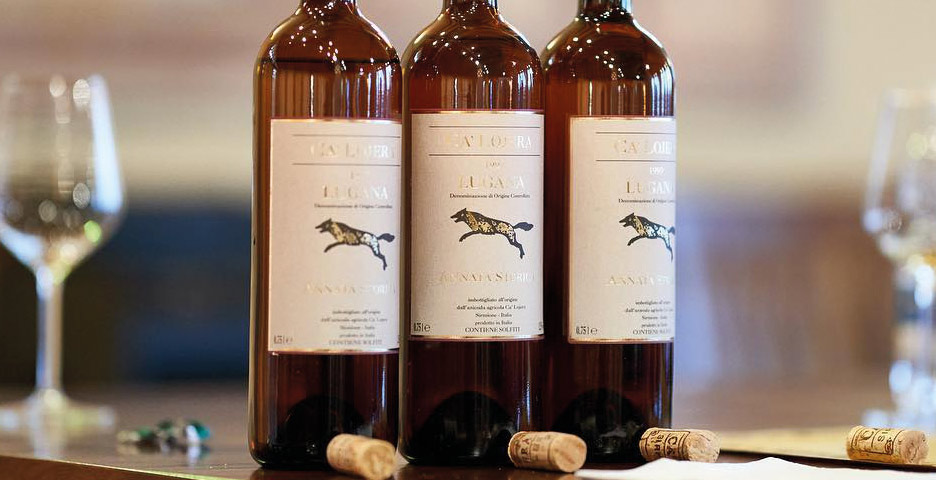
Time as an invisible ingredient
In Lugana, time is not a technical detail.
It is an invisible ingredient, present from the very beginning.
Aging in Lugana is not meant to change the wine, but to allow it to become fully itself. It is a silent process, one that does not seek special effects, but balance.
Not all white wines know how to wait
Many white wines are born to be drunk young.
Lugana is not. Or rather: it can be enjoyed young, but it does not end there.
Its natural structure, the acidity of the Turbiana grape, and the minerality of the soils allow the wine to move through time without losing tension. This is where the true evolution of Lugana begins.
What aging means in Lugana
When people speak of Lugana aging, they often think only of the months or years required by the regulations. In reality, aging is a sequence of choices:
- the moment of harvest
- the way the wine is guided
- time spent on the lees
- bottle aging
Each step helps build depth, not overwrite the wine’s character.
The early years: freshness that integrates
In the first years, Lugana evolves with discretion.
Freshness remains central, but becomes integrated. Aromas grow more complex, less immediate.
Emerging notes include:
- riper fruit
- evolved floral hints
- deeper minerality
The wine becomes more harmonious, without losing momentum.
Long aging: when Lugana surprises
As the years pass, Lugana’s evolution enters a deeper phase.
The color turns more golden, the aromatic profile broadens: light honey, dried herbs, stone, sometimes balsamic notes.
On the palate, freshness does not disappear—it changes form. It becomes softer, more enveloping. The sip slows down and invites reflection.
This is where Lugana shows that it is far from an ordinary white wine.
Aging does not mean power
A key point: in Lugana, aging never leads to heaviness.
It does not seek extreme concentration or chase opulence.
Time works by subtraction, not accumulation. It smooths the edges, making the wine more coherent and more legible.
Young Lugana and aged Lugana: two languages
Young Lugana speaks of the present.
Aged Lugana speaks of memory.
They are two different languages, both legitimate. Understanding this helps in choosing when to drink a bottle—and how to listen to it.
Ca’ Lojera and the idea of evolution
For Ca’ Lojera, aging Lugana is an act of trust.
Trust in the grape, the territory, and time.
The wine is not pushed, but guided. Each bottle is allowed to evolve at its own rhythm, without forcing.
Lugana as a wine that grows with the drinker
Lugana’s evolution is not only chemical.
It is also emotional.
A Lugana enjoyed young and then rediscovered years later tells two different stories—both true. And perhaps this is its greatest value: it never stops having something new to say.
In the end, time can be felt
In Lugana, time is not immediately visible.
It is felt—in the silence of the sip, in the persistence, in the sensation that lingers after the glass.
And that is where one truly understands what aging means.