When to Drink Lugana: Seasons and Serving Temperature
December 18, 2025
Aging Lugana: What Really Happens to the Wine Over the Years
December 18, 2025
Choosing a wine is an act of trust
When you buy a bottle of Lugana, you are not choosing just a wine.
You are choosing a story, a territory, a way of understanding time.
Understanding how to choose a quality Lugana does not mean memorizing technical parameters, but developing an attentive eye—one that can recognize coherence and authenticity.
The first clue: the territory
A quality Lugana is always born from a precise place.
The Lugana DOC area is limited, and a wine that bears its name must reflect that context: the climate of Lake Garda, clay-rich soils, natural balance.
When the territory is communicated clearly, without excessive marketing, it is often a good sign.
The grape variety as a signature
The heart of Lugana is Turbiana.
A quality Lugana does not force the grape, nor does it make it exotic or artificial. On the contrary, it respects its freshness, salinity, and ability to evolve over time.
If a wine appears overly aromatic or overly constructed, it is often losing its connection to its origin.
Balance before power
One of the most common mistakes is to seek intensity at all costs.
Lugana is not a wine of power, but of balance.
A good Lugana is:
- fresh, but not aggressive
- structured, but not heavy
- persistent, but never tiring
If a sip invites the next one, that is already an important sign.
Young or aged: knowing what you are looking for
To choose a Lugana, it is essential to understand what you want.
Young Lugana:
- direct and immediate
- ideal for everyday drinking
Aged Lugana or Lugana Riserva:
- more complex
- requires time and attention
It is not a matter of better or worse, but of the right moment.
The importance of the producer
Behind every quality Lugana there is always a producer who works with consistency.
Big words are not needed—what matters are continuity, respect for the regulations, and deep knowledge of the vineyards.
Wineries that do not chase trends, but remain faithful to the territory, build wines that are recognizable over time.
The bottle as a story
The label, too, can say something—if observed carefully.
Not through design, but through the information it chooses to communicate.
Transparency, clarity, and restraint are often signs of a serious approach.
Price as an indicator, not a guarantee
Price can help, but it is not a certainty.
A quality Lugana has a cost that reflects the work behind it: vineyards, yields, time, and care.
Being wary of extremes is always wise—prices that are too low or excessively inflated rarely tell the true story of the wine.
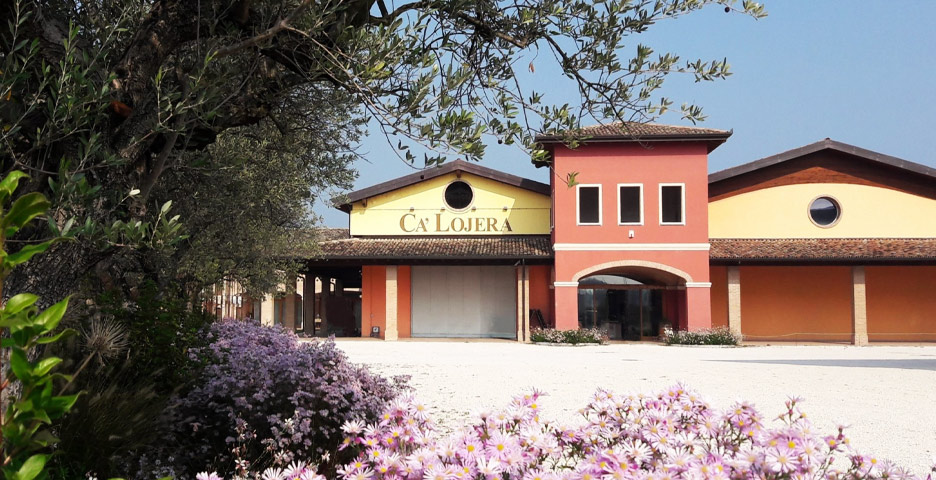
Ca’ Lojera and the idea of quality
For Ca’ Lojera, quality is not a declared goal, but a consequence.
It grows out of daily choices, a deep relationship with the land, and a vision that places wine before the market.
A quality Lugana, for Ca’ Lojera, is a wine that remains true to itself even as vintages change.
Trusting your own palate
The final piece of advice for choosing a quality Lugana is the simplest: trust your own palate.
A good Lugana does not tire, confuse, or impose itself.
It accompanies, it lingers, it returns.
And when a bottle manages to do this, the choice has already been made.